


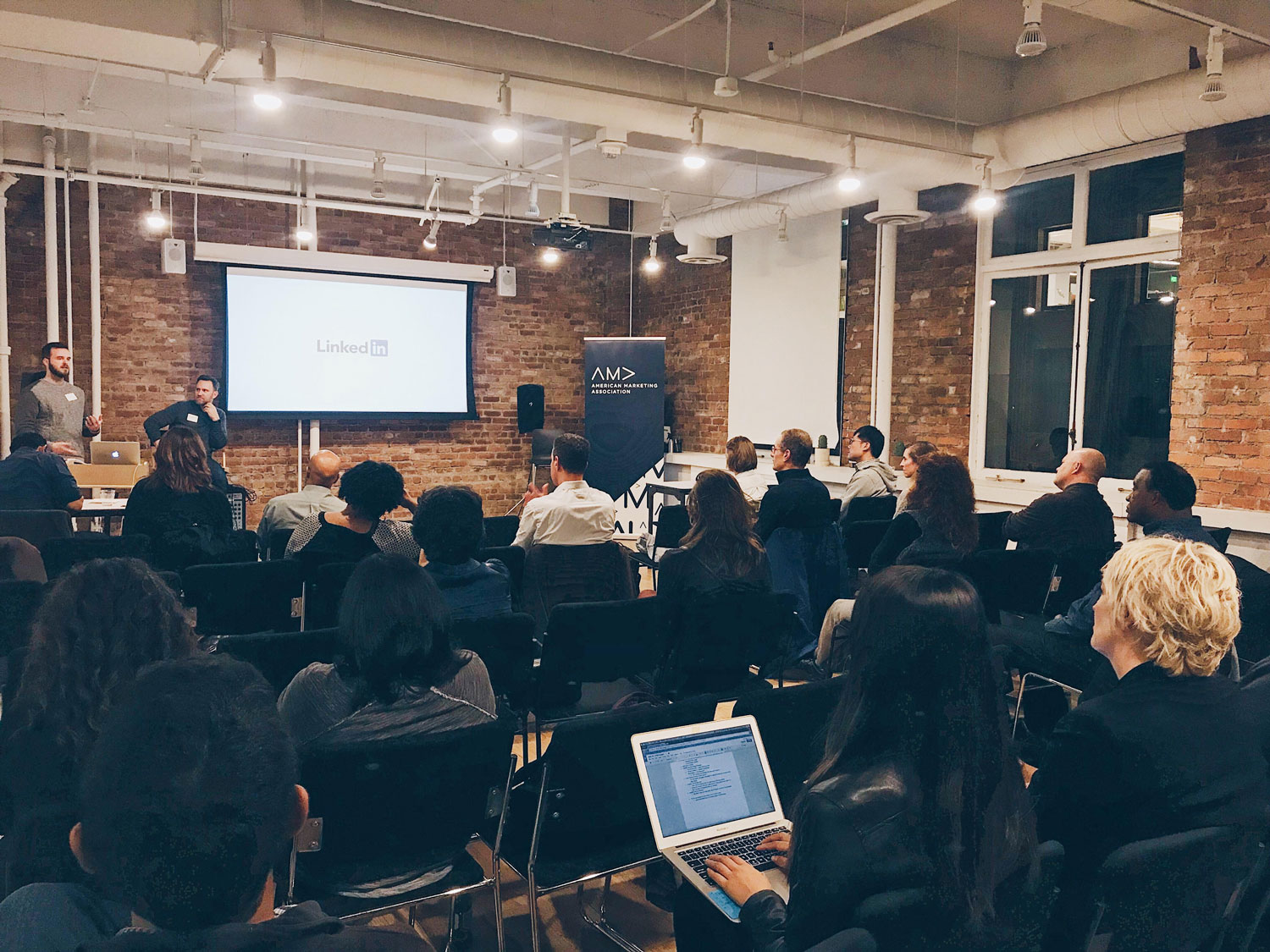
On Thursday November 16, the AMA SF hosted “Harnessing the Power Of AI” at General Assembly in the Financial District to discuss another hot topic in marketing: Artificial Intelligence or AI. AI is starting to change industries: transportation, manufacturing, medicine, defense, and of course – marketing.
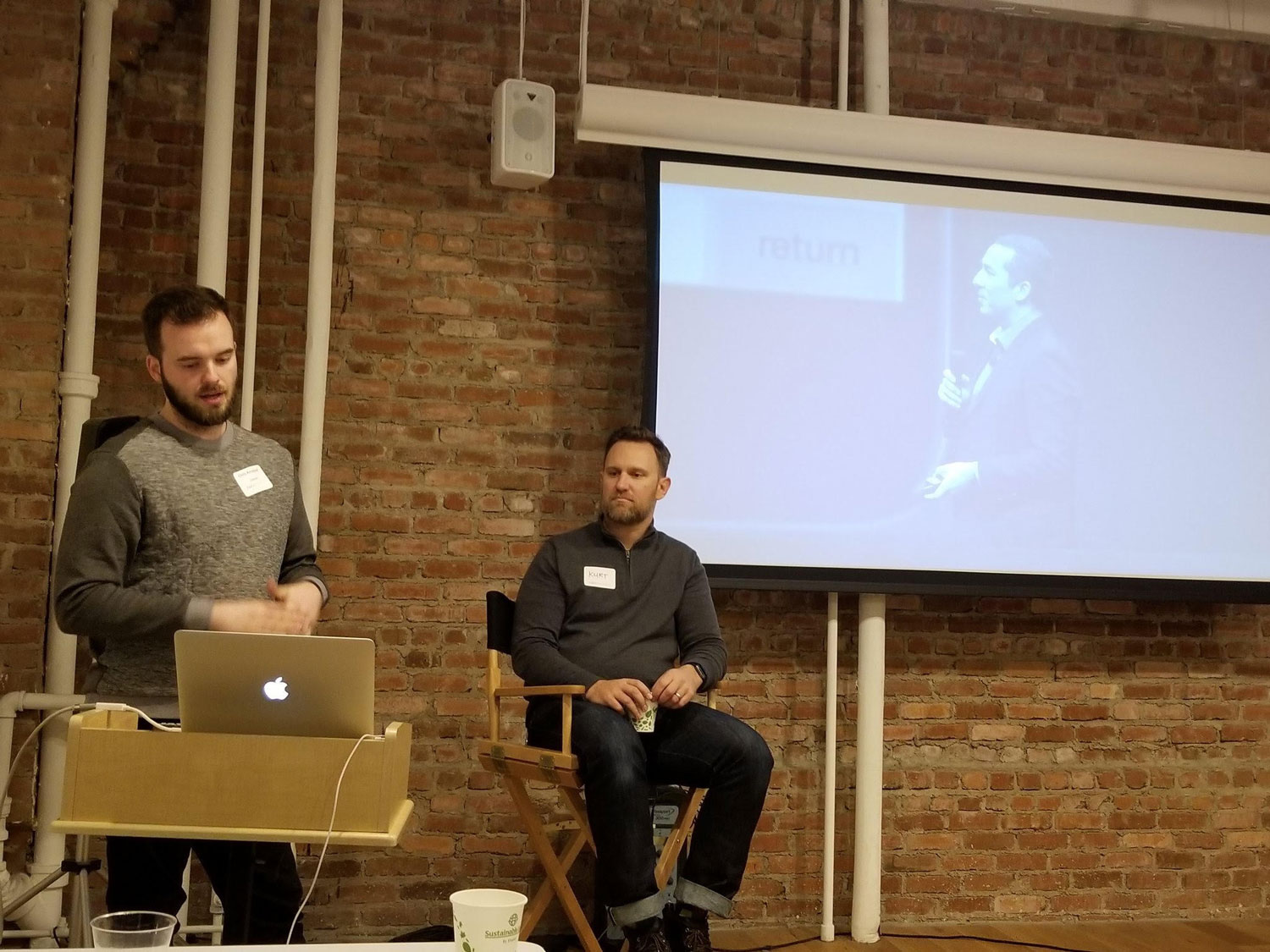
Our panelists were Chris Atwood and Kurt McCulloch, who are both on the User Experience Research and Design team at LinkedIn. They discussed how they have used AI in designing the LinkedIn user experience.
What is AI?
Essentially, Artificial Intelligence or AI is the ability for machines to “learn” from experience and then use what it learns to process large amounts of data to complete a task (Source). This task almost seems “human-like” because of its ability to adjust to new inputs. AI, however, is more efficient than the human brain in analyzing large sets of data to detect patterns. Because of this, AI is now used in businesses in many ways to acquire more insight from the large amounts of data that is being captured.
LinkedIn and AI
At the top-level, AI is processing data and learning from it. However, it can be used in many different applications. Chris and Kurt talked about how AI at LinkedIn started off as a scheduling bot. As a UX Designer, Chris is responsible for what the customers interact with and as a UX Researcher, Kurt dives deep into the data to understand the voice of the customer and their needs.
“(Our) challenges shape the direction we go in,” they said when talking about the different obstacles they face with designing the user experience with AI.
When creating the scheduling bot in LinkedIn, they discovered that there were too many complexities, especially with the calendar integration. Ultimately, they decided not to continue with the schedule bot.
Power of conversation
For Kurt and Chris, their end goal is always to improve the lives of their customers. According to Kurt, their motivational question is “How can a conversational interface enable members to get more from LinkedIn?” They emphasized that conversation is at the core of all opportunities. They want to boost careers by enhancing the ability to “message your way in.”
A recent accomplishment is the “smart reply” in their messaging feature. When users type up messages to other users, the bot suggests a short and quick response that it has deemed appropriate. This is an example of AI learning from a large set of data (other messages and responses) to learn and execute an action (the short response).
Designing for AI principles
When designing for AI, Kurt and Chris keep a few core principles. The first is to “do one thing well, leave room for growth.” They want to help make better use of LinkedIn without adding to the complexity, which is why they started off small with the smart reply. The goal is always to “augment, not to overwhelm.”
Kurt says, “Start with AI in obscure areas before integrating it within the ritual, habit, routine of the user. It is important to always be ‘action-oriented’ and ask how to provide value.”
Second, act with empathy. Think in terms of stories and play out these stories before bringing your AI concept to life within these stories.
Third, have a good balance when it comes to being proactive. As an example, they asked the audience if anyone remembers Clippy, the Office Assistant, from Microsoft Word’s interface. Clippy was detestable, constantly suggesting actions that were not always relevant or helpful. For Kurt and Chris, their goal is “never to have users stare at LinkedIn longer but to provide actual value.”
Overcoming unique challenges
When it comes to AI-powered functions, Chris said that customers “are very unforgiving.”
As an example, he says, “If Siri gave us directions to the wrong place, there is only a limited amount of times we would try again.”
Also, when people think of AI, they think of an “omniscient robot that does everything.” These high expectations are a challenge for Chris and Kurt in building the LinkedIn Assistant.
Additionally, a unique obstacle is that AI is commonly known as a “black box.” It learns itself and therefore we do not know exactly what it is teaching itself, what the “meaning” of what it’s learning, and how it reaches its conclusions. All we know is the model that the AI is learning from. This lack of transparency leads to a risk of autonomy.
AI and you
Although AI is still in its early stages, it is definitely a good idea to learn more and imagine ways it can be used to improve your business. It is a good idea to look at big businesses in your industry to see how they are innovating with AI. According to Forbes, AI has huge implications for marketing.
The author’s LinkedIn is: https://www.linkedin.com/in/rebeccatsui/
Comments are closed.