


Modern marketing conversations often focus on tools, tactics, and the newest AI breakthrough. Yet the most durable lessons about strategic growth rarely come from software announcements or trend reports. They come from leaders and operators who have spent decades navigating changing technology, economic cycles, and evolving marketing expectations.
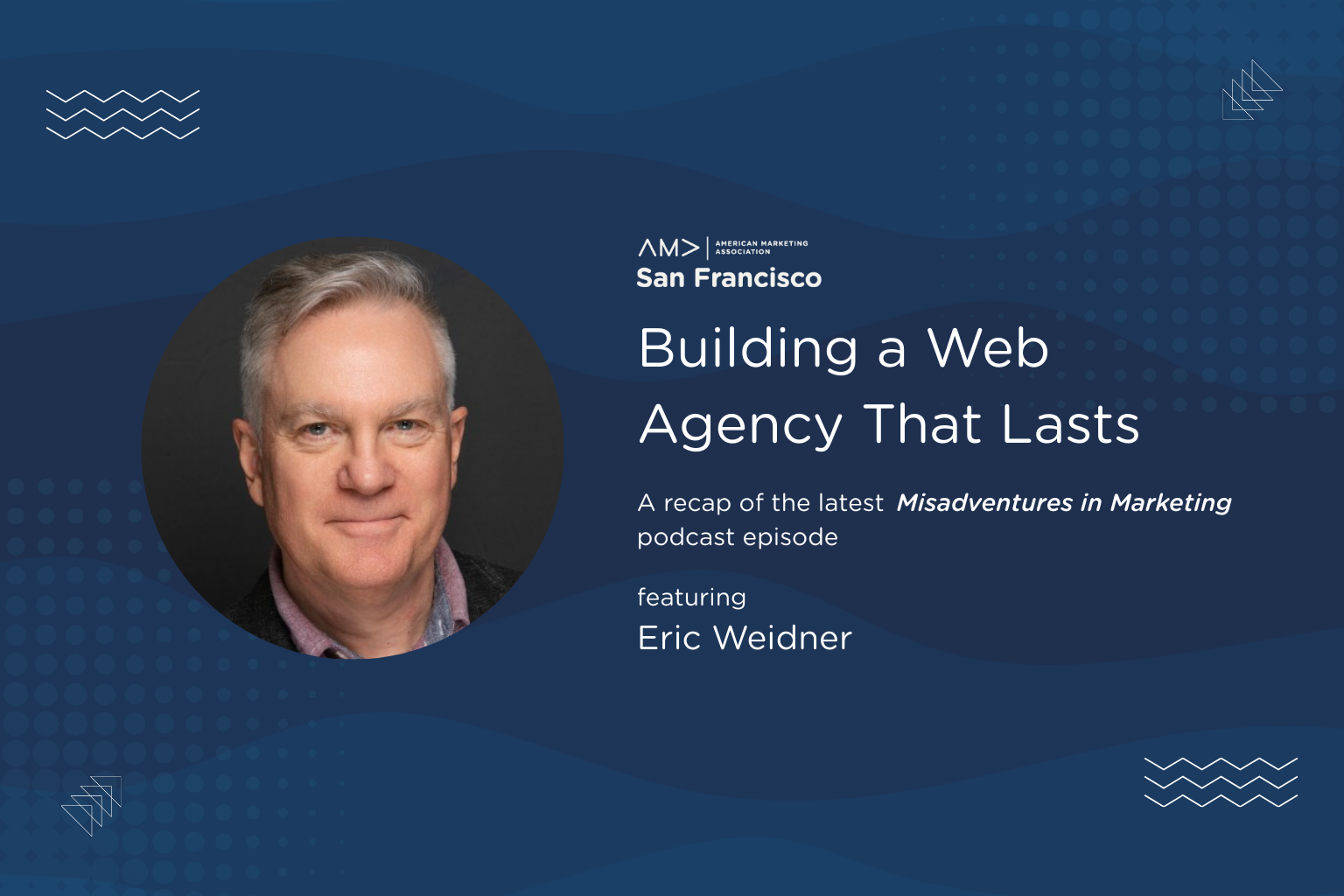
This theme emerged clearly in the latest episode of Misadventures in Marketing, presented by AMA San Francisco. Hosts Peter Farago and Steve Haney sat down with Eric Weidner, owner of Workbox and former president of AMA San Francisco. Their conversation ranged from the dot‑com boom to modern AI disruption, but the deeper thread was about how marketing leaders actually build careers, companies, and brands that last. The discussion offers a useful lens for anyone thinking about modern marketing leadership, brand credibility, and the operational realities behind strategic growth.
Leadership Often Means Getting Out of the Way
The episode opened with a surprisingly simple leadership principle. Steve Haney credited Eric Weidner for helping launch the podcast itself, explaining that the show exists largely because Eric encouraged the hosts to simply try the idea and run with it. This approach reflects a philosophy many marketing leaders forget once organizations grow. Strong leaders often succeed by stepping aside rather than controlling every decision.
Eric reinforced this perspective with a candid observation about volunteer organizations like the American Marketing Association. Volunteer leadership requires encouragement rather than enforcement. As he explained, “you only have carrots. You don’t have the stick.” When experienced professionals bring ideas forward, the most effective leaders create space for those ideas to grow instead of micromanaging the process. This dynamic explains why community organizations often produce surprisingly strong marketing initiatives despite limited resources.
For modern marketing teams, the lesson extends beyond volunteer work. Creative and strategic teams perform best when leadership creates trust, removes friction, and encourages experimentation rather than enforcing rigid control.
Many Marketing Careers Start by Accident
Eric’s origin story illustrates another reality about marketing careers. Many of them begin without a deliberate plan.
After moving to San Francisco in the 1980s, Eric worked temporary roles in law firms while learning networking systems and early PC technologies. As the internet began emerging commercially, he started experimenting with website development long before “web designer” became a common profession. That technical curiosity eventually turned into client work. Early customers came from professional relationships he already had, including attorneys who needed their first online presence.
Soon afterward he partnered with experienced designer John Miller, forming a small agency that combined design expertise with emerging web development capabilities. During the late‑1990s dot‑com boom, the demand for websites expanded rapidly. At the time, Weidner admitted that he did not initially view himself as a marketer. “All of a sudden I found myself in marketing,” he said, recalling how building websites naturally pulled him into the broader marketing ecosystem. That realization led him to join the American Marketing Association in 1999, primarily to learn from other marketers and better understand the discipline he had unexpectedly entered.
His story highlights a pattern many modern marketing leaders recognize. The field increasingly attracts professionals from engineering, design, analytics, and product backgrounds rather than traditional marketing education.
Easy Growth Can Hide Structural Problems
The early success of Eric’s agency coincided with the explosive growth of the internet economy. Businesses suddenly needed websites, and venture‑funded startups had significant marketing budgets to spend. For several years, demand outpaced operational discipline. Eric described the period with refreshing honesty. Companies called agencies after raising venture capital and needed websites immediately. Projects moved quickly and budgets seemed unusually generous. Looking back, he acknowledged that rapid revenue masked deeper gaps in business fundamentals.
“Making money quickly can cover up a lot of sins,” he said. That reality became painfully clear when the dot‑com bubble collapsed in 2000. The sudden contraction eliminated easy client acquisition and forced many agencies to confront the operational realities of running a services business. For Eric, that period required learning sales discipline, financial planning, and relationship management in ways the earlier boom had not required.
Many modern startups and marketing teams face similar conditions today. Periods of rapid growth can obscure structural weaknesses until external conditions shift. Sustainable marketing organizations build discipline long before they urgently need it.
Reputation Becomes the Real Growth Engine
After the early turbulence of the 2000s, Eric gradually rebuilt the agency with a clearer understanding of what drives long‑term success. For boutique marketing services firms, reputation often matters more than aggressive outbound sales strategies. For Eric, long‑term agency growth ultimately came down to reputation and relationships.
Client relationships, professional communities, and long‑term trust became the primary sources of new business. Delivering exceptional service, even when it required short‑term sacrifices, strengthened that reputation over time. In practical terms, that meant prioritizing client outcomes and maintaining strong connections within professional networks such as AMA San Francisco.
Over time, the accumulation of trust created a powerful brand association. When people in Eric’s network think about website development, they think about him and his company. That dynamic illustrates an often overlooked aspect of brand marketing. Reputation compounds slowly but produces durable competitive advantage once it becomes established.
Specialization Creates Strategic Advantage
Another turning point in the agency’s evolution came through specialization. Over time, Workbox increasingly focused on pharmaceutical and biotechnology clients. That focus emerged partly through opportunity. Early projects within the healthcare sector led to deeper relationships and a better understanding of the industry’s regulatory and operational complexities.
The pharmaceutical industry presents unique marketing challenges. Regulatory oversight influences messaging, content distribution, and even website architecture. Healthcare marketing must balance educational information, physician engagement, consumer communication, and strict compliance requirements simultaneously. As Peter noted during the discussion, pharmaceutical marketing often operates as a multi‑layered system that reaches both consumers and medical professionals. For Eric, the specialization ultimately provided a strong competitive advantage. Deep knowledge of industry constraints allowed the agency to deliver more sophisticated digital infrastructure than generalist firms.
That pattern mirrors a broader trend across modern marketing services. Agencies that build expertise within specific industries often outperform larger generalist competitors.
AI Is Reshaping Marketing Discovery
The conversation eventually turned toward one of the most pressing issues facing marketers today: how artificial intelligence will reshape online discovery.
Clients increasingly ask how traditional search engine optimization will interact with emerging AI‑driven discovery tools. Eric offered a measured perspective that avoids both hype and panic. According to his current view, the fundamentals of SEO remain largely intact. High‑quality content, strong site architecture, and technical optimization still matter. However, new nuances are emerging as AI systems increasingly determine how information surfaces online.
One tactical insight already gaining traction involves structured content formats. “AI systems love a good FAQ,” Eric noted, pointing out that question‑and‑answer formats align closely with how large language models process information. More broadly, he emphasized the importance of recency. Many AI systems prioritize newer content, which means brands must maintain consistent publishing cadence to remain visible.
That shift could significantly increase the volume of digital content across industries. The emerging reality of AI‑driven discovery for marketing leaders today is that maintaining a consistent content velocity will increasingly determine whether brands remain visible.
Brand Credibility May Matter More Than Ever
Ironically, the rise of AI may reinforce one of marketing’s oldest principles. Large language models rely heavily on credibility signals when determining which information sources to trust. Universities, research institutions, well‑known publications, and established brands naturally benefit from those credibility filters.
Eric expects that pattern to continue. As AI systems evaluate sources, they will likely gravitate toward organizations with strong reputations and clear authority within their domains. In other words, brand building remains one of the most powerful long‑term marketing strategies available.
For decades marketers have argued that brand equity influences discovery, trust, and purchasing decisions. AI‑driven search may reinforce that argument even more strongly.
Collaboration Between Marketing and IT Is Essential
One final insight from the conversation deserves particular attention. Ericemphasized the importance of collaboration between marketing teams and technical teams inside large organizations.
Modern digital marketing depends heavily on data infrastructure, security protocols, and content architecture. Without strong coordination between marketing, communications, and IT departments, many initiatives struggle to reach their full potential. That alignment enables faster experimentation, stronger data integration, and more secure digital experiences.
Marketing leaders who cultivate those cross‑functional relationships often unlock capabilities their competitors cannot easily replicate.
Durable Marketing Careers Are Built Over Decades
The Misadventures in Marketing conversation with Eric Weidner ultimately reveals something deeper than tactical marketing advice. Enduring success in marketing rarely comes from a single campaign, platform, or technology shift. It emerges from a combination of reputation, discipline, relationships, and the willingness to evolve alongside the industry.
Technology will continue transforming marketing channels and workflows. AI will reshape discovery. New tools will emerge every year. Yet the underlying principles remain surprisingly consistent.
Build trust with your audience. Invest in relationships. Develop real expertise in your domain. Support your professional community. Maintain a reputation for delivering excellent work.Those habits created durable marketing careers long before artificial intelligence existed. They will likely remain just as powerful in the decades ahead.
For marketers navigating today’s rapidly changing landscape, that perspective may be the most reassuring insight of all.
🎧 Tune in now to Season 3, Episode 3: Building a Web Agency That Lasts.
👉 Listen to the podcast on Spotify and Apple Podcasts.
📚 Check out summaries from other episodes:
- How Modern Marketing Teams Choose the Right Channel Mix
- More Than a Mic: Strategic Speaking That Drives Growth
- When Nobody Cares: The New Rules of PR and Attention
Misadventures in Marketing is a weekly podcast by the AMA San Francisco chapter. Veteran Silicon Valley marketing execs Peter Farago and Steve Haney explore the messy, rewarding, and occasionally absurd world of high-tech marketing — especially in early-stage startups. Each episode covers real-world challenges, trends, and lessons from the front lines.



Comments are closed.