


You’ve felt that cold chill. It’s the machine age creeping into your morning scroll, whispering that your decades of expertise are about to be archived by a Large Language Model. The prevailing narrative is one of replacement: the digital successor is here, and it doesn’t need a lunch break. But history – from the printing press to the industrial loom – tells a different story. Technology rarely just destroys; it transforms. The real question isn’t whether the machines are coming, but whether you, as a marketing leader in the age of AI, have the spirit to direct them, or whether brands will simply become another piece of processed digital noise.
The stakes are already visible on the ground. In Season 1 Episode 5 of AMA SF’s Misadventures in Marketing podcast, “If You Cut An AI, Does It Bleed?”, hosts Peter and Steve shared their on the ground experiences. In one example, many business development reps had been laid off in favor of AI-powered outbound agents — not a hypothetical, but a completed org chart change. This conversation — what to automate and what to protect — is exactly the one marketing leaders are facing today.
Why efficiency breeds complexity
In economic circles, there is a concept called Jevons’ Paradox. It’s the counter-intuitive reality that as a resource becomes cheaper and more efficient to produce, we don’t use less of it – demand actually explodes.Think back to the transition from hand-drafted architectural blueprints to CAD software. When every line was a manual labor of love, blueprints were rare, expensive, and precious. When CAD arrived, the cost of a single drawing plummeted. Did architects go extinct? Quite the opposite. Because the distribution of design became cheap, we began building exponentially more complex structures – multi-layered skyscrapers and intricate urban webs that would have been impossible to manage with a T-square and a pencil.
This principle – where efficiency unlocks complexity – is now playing out on a massive scale in marketing. AI is shattering the production bottleneck. We aren’t just making more copy; we are building increasingly complex, multi-touch architectural customer journeys. As the novelist William Gibson famously observed, “the future’s already here — it’s just unevenly distributed,” and that distribution is currently reshaping the marketing org chart.This shift is birthing entirely new roles:
- Prompt architects: High-level directors who specialize in training AI to move beyond generic outputs.
- Data strategists: The guardians of the pipeline, ensuring that the garbage in, garbage out cycle is broken before it begins.
The uncanny valley of outreach
There is a world of difference between automation and autonomy. In the rush to scale, too many brands are handing the keys to autonomous agents and driving straight into the uncanny valley. We’ve all seen the emails: they look human, they sound human, but they feel off. They clumsily personalize based on the wrong firmographics, like a robot trying to wear a human mask. When you let an autonomous bot burn through your leads with tone-deaf outreach, the damage isn’t just a lost meeting – it’s a degraded brand. High-stakes B2B marketing isn’t a solo act; it’s a constellation of decision-makers. Navigating that requires a level of discernment a bot simply cannot simulate.
Steve Haney framed the question: “Are they ever going to be as nuanced as a human being in terms of interacting with other human beings to sell products, to emote, to draw people into your brand?” The answer, for now, is no — not without a human steering. If an AI agent mishandles a skeptical prospect, you’ve lost more than a lead; you’ve lost trust. The smartest players use AI as a filter, not a replacement. They use escalation triggers – the engineering equivalent of sales qualification – to identify the exact moment a prospect is qualified enough to merit the high-value energy of a human being.
Consistency vs. soul
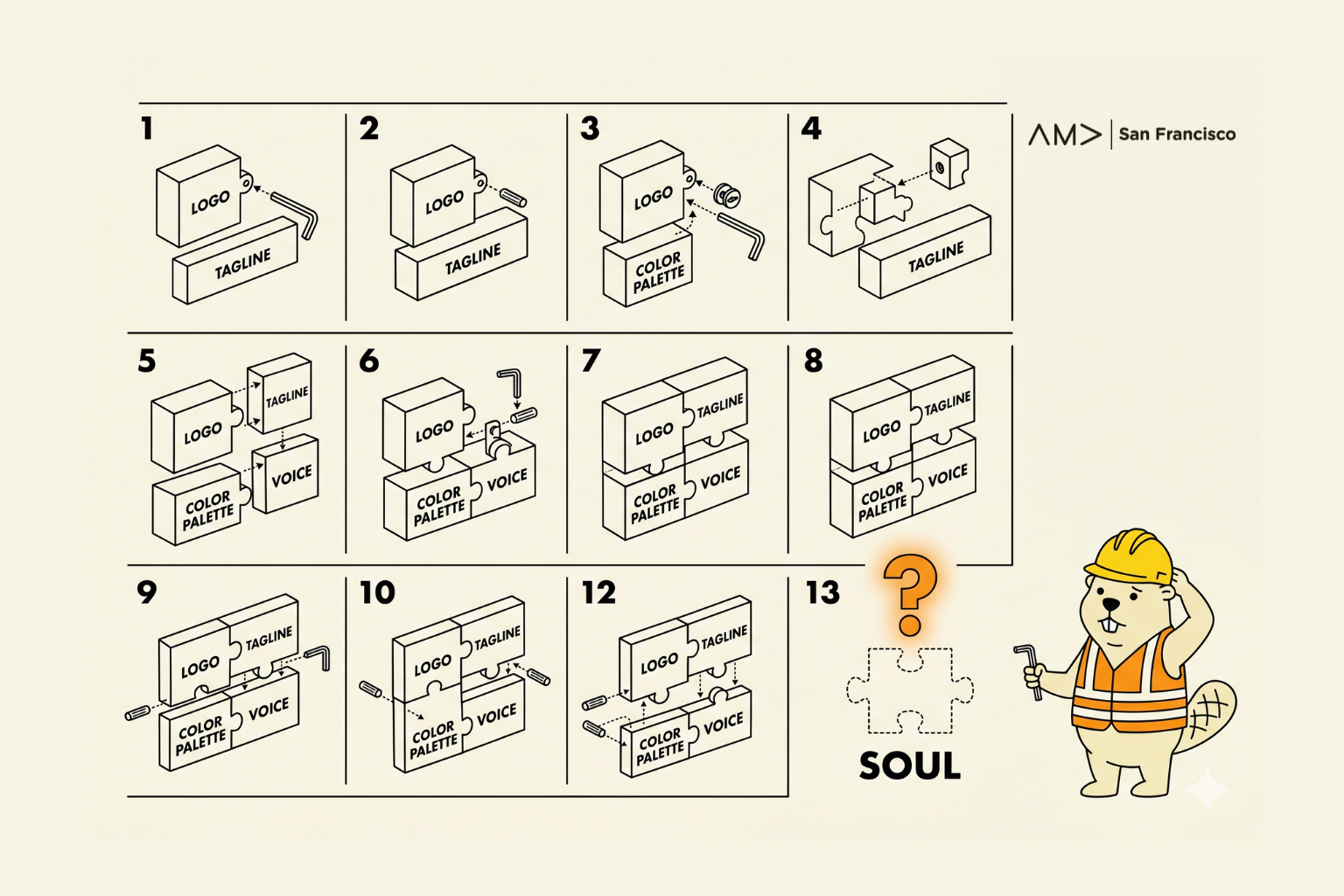
Modern marketing is splitting into two camps: the processed and the handcrafted. Think of IKEA furniture. It is consistent, budget-friendly, and serves a massive functional need. It is the fast food of the home. Much of today’s AI-generated content is the IKEA of marketing – reliable, fast, and mass-produced. It’s good enough for mass marketing. But at the top of the pyramid sits the bespoke, hand-carved mahogany desk. This is where the human spark lives.
In cooking, a master chef knows the salt, the heat, and the timing – that intuitive spiciness that tells them when to pivot or when to let the sauce reduce. In marketing, that intuition is the human element. AI can give you the structure of a campaign, but only a human woodworker knows the exact grain of the mahogany. Only a human marketer knows when a campaign needs more heat or a different seasoning to truly resonate with a community’s soul. AI provides the consistency; humans provide the fire.
AI as the ultimate co-pilot, not the pilot
To become a high-performer, marketing leaders must view AI as the ultimate co-pilot. It handles the plumbing – research, data enrichment, and initial drafting – allowing you to remain the pilot of the strategy. Peter Farago described the engineering craft that makes that arrangement work at scale. His company builds AI agents that answer advanced technical support questions on behalf of highly technical companies, and Peter is candid that the answer quality lives or dies on what happens beneath the surface. “It starts with data ingestion and then having an advanced data pipeline,” he explained, followed by fine-tuning an actual model rather than riding on a general-purpose LLM — because a discerning, skeptical technical audience will spot a generic answer immediately.
Just as critical is what Peter calls breaking the task into small steps with carefully placed guardrails. The agent must know when to say “I don’t know the answer,” and when to say “I only know this with partial confidence — here is what is certain.” Confidence scoring, in other words, is not a nice-to-have; it is the seam where autonomy ends and human judgment begins.
The most sophisticated way to operationalize his in marketing is through Retrieval-Augmented Generation (RAG). This is how you prevent the Uncanny Valley. By forcing the AI to ground your brand’s specific history, voice, and style manuals, you constrain its outputs. The result is not getting generic LLM fluff; it is a tool trained on your specific spiciness. For a multi-channel product launch campaign, you don’t just ask for a draft. You architect a series of micro-tasks with logical guardrails:
- Step 1: Use AI to analyze firmographic data to find the trigger for the campaign.
- Step 2: Deploy a RAG-tuned model to generate the structure of social posts and emails based on your unique voice.
- Step 3: Use confidence scores to identify where the AI is guessing and intervene manually. Human pilots don’t just give a prompt; they build a system of logic gates that ensure the final product actually breathes.
The question of the human spirit
AI is a master of structure. It can replicate the grammar, the cadence, and the patterns of successful marketing with startling efficiency. But it struggles to replicate the fire – the genuine enthusiasm that makes a person stop scrolling and start feeling. In an increasingly automated world, the brands that thrive will be those that know exactly where to inject their humanity. AI can ensure your marketing is processed and consistent, but only you can ensure it is soulful. As you integrate these tools, ask yourself: In a world of automated noise, will your brand bleed data, or will it breathe life?
 Listen to the full podcast on Spotify and Apple Podcasts.
 Check out summaries from other episodes:
- The New AI-Powered B2B Customer Journey
- Resilience, Discipline, and Reputation: Lessons for Leaders
- How Modern Marketing Teams Choose the Right Channel Mix
Misadventures in Marketing is a weekly podcast by the AMA San Francisco chapter. Veteran Silicon Valley marketing execs Peter Farago and Steve Haney explore the messy, rewarding, and occasionally absurd world of high-tech marketing — especially in early-stage startups. Each episode covers real-world challenges, trends, and lessons from the front lines.




Comments are closed.