


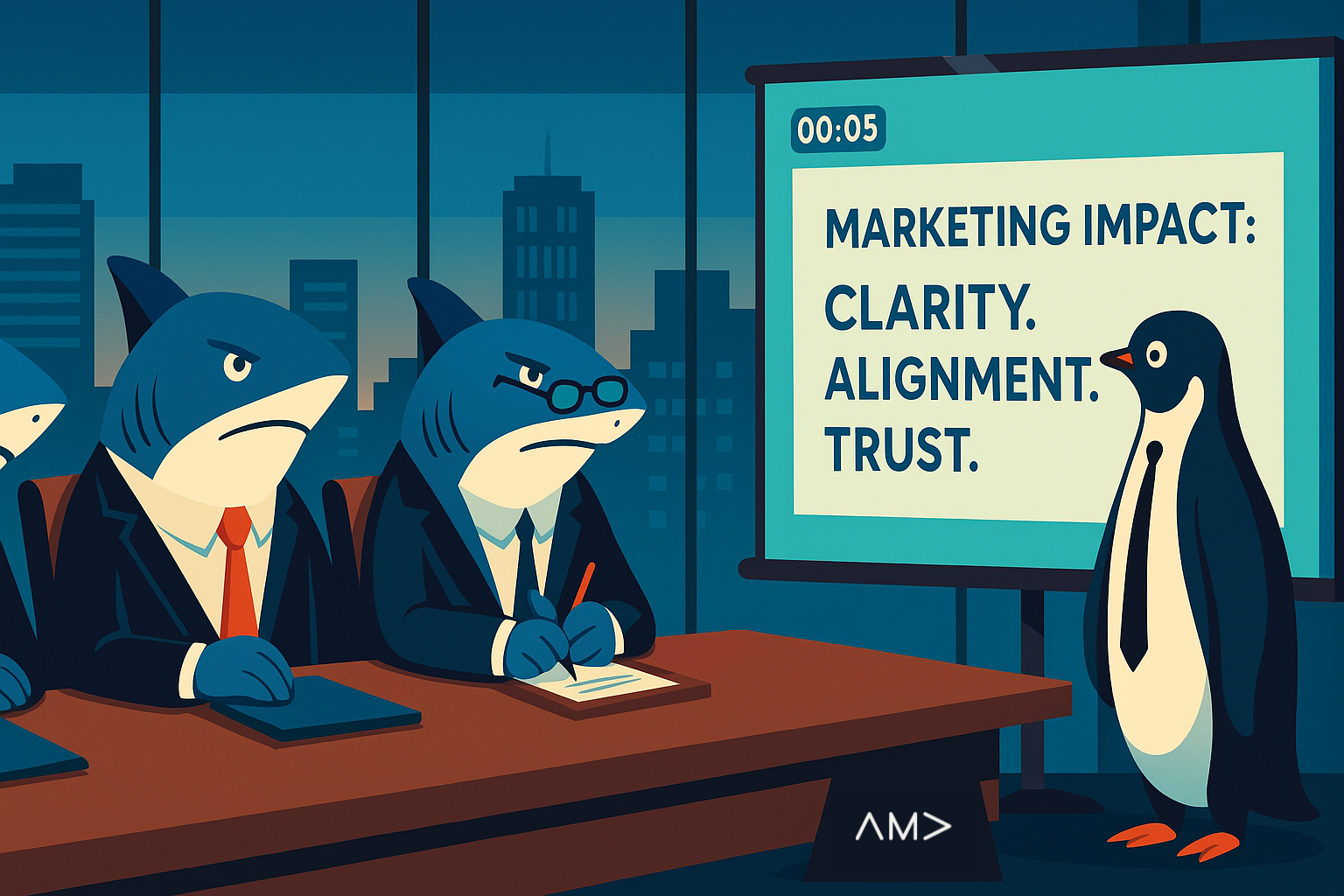
In this episode of Misadventures in Marketing, hosts Peter Farago and Steve Haney unpack one of the most misunderstood—and often mishandled—responsibilities for marketing leaders: how to show up in a board meeting.
CMOs typically get a few minutes to convey progress, surface risks, and signal alignment across the entire GTM engine. Many squander that time with too many slides, vague commentary, or defensive positioning. In fact, even seasoned executives find board presentations “the most demanding test of leadership communications” and very few succeed at truly winning over the room. Peter and Steve take listeners behind the curtain—sharing their own battle scars, boardroom wins, and the philosophies that shape how seasoned operators read the room, build trust, and strengthen relationships with directors.
Why This Topic Matters (More Than Ever)
Board expectations for marketing have shifted dramatically. Marketing leaders are expected to present “direct, quantifiable business impact,” not activity metrics. Boards want crisp narrative, clarity of strategy, and absolute alignment with sales. No drama, no surprises.
This episode gives CMOs a playbook for exactly that.
The Real Job: Build Confidence, Not Theater
Peter and Steve acknowledge a universal truth: Board meetings are more about confidence and alignment than performance theater. The following themes stand out:
1. Right-size the message
Early-stage boards require more operational detail. Growth-stage or enterprise boards want oversight, trends, and risk. Marketing leaders must tailor accordingly—no one wants a 20-slide funnel breakdown when the Board cares about CAC, pipeline coverage, and brand momentum.
2. Show both hands on the wheel
Marketing leaders often over-optimize for “selling the vision.” But the most trusted CMOs show equal parts competence and humility. As Steve says, “You can’t take every tough question as confrontation. They’re collaborators, not adversaries.”
3. No surprises—ever
The “meeting before the meeting” matters more than the boardroom presentation itself. Align with the CEO, socialize any hard news 1:1 with directors, and frame challenges in terms of options and asks. As Peter notes: “You don’t want them hearing bad news for the first time as a group.”
The Power of Alignment: Marketing + Sales + CEO
Board meetings can quickly devolve into political theater if GTM executives show up misaligned. Peter and Steve emphasize:
- If the CRO’s slides say one thing and the CMO’s story says another, the board immediately senses dysfunction.
- Marketing should reinforce—not contradict—the revenue narrative.
- Every slide should ladder up to the CEO’s storyline, not compete with it.
One of the most effective techniques they recommend is building pre-alignment rituals: shared dashboards, dry-runs with the CEO, and calibrating what “good” looks like before stepping into the room.
What CMOs Should Actually Present
Think clarity over comprehensiveness. Peter outlines the three anchor points every CMO should hit:
- What’s working: Wins tied directly to revenue motion: pipeline sourced, conversion improvements, brand lift tied to demand signals.
- What’s not working: Transparent, succinct, and framed in terms of business implications, not excuses.
- Where you need help: Boards want to help—but only when the ask is concrete. Introductions, strategic hires, new market access, or approval for budget shifts.
Steve adds an important nuance: “If you were given 15 minutes, prepare for five. They will interrupt you. Be ready.”
The Board as Allies—Not Adversaries
CMOs who treat board meetings as interrogation zones tend to crumble. CMOs who treat them as strategic allies usually thrive.
Peter shares that by developing a relationship with a marketing-savvy board member, he ensured marketing had a strong internal advocate. Someone who understood brand, defended the function’s long-term investments, and helped accelerate decisions.
The lesson: Your influence with the Board is built between meetings, not during them.
What Operators Wish More CMOs Knew About VCs
This episode doesn’t shy away from uncomfortable truths—like the inherent tension between operators and investors. Steve recounts how founders and VCs often operate from different incentive structures. VCs push for velocity and outsized returns, while operators navigate risk, cash, hiring, and product cycles. CMOs must understand these structural incentives to avoid misreading the room.
As Peter notes, “Transparency builds trust, but so does understanding the psychology of who you’re presenting to.” Steve sums up the goal succinctly: “When I walk out that door, I want them to feel marketing is in good hands.”
That’s the bar. That’s how CMOs earn trust, autonomy, and influence.
🎧 Tune in now to Season 2, Episode 6: Board Tales: How to Win the Room
👉 Listen to the podcast on Spotify and Apple Podcasts.
📚 Check out summaries from other episodes:
- Mind the Gap: Why So Many Leads Die Between MQL and SQL
- GTM Strategy in the AI Era: Plan, Punch, Pivot
- Funnel Hacked: What Happens When AI Eats the Buyer Journey
Misadventures in Marketing is a weekly podcast by the AMA San Francisco chapter. Veteran Silicon Valley marketing execs Peter Farago and Steve Haney explore the messy, rewarding, and occasionally absurd world of high-tech marketing — especially in early-stage startups. Each episode covers real-world challenges, trends, and lessons from the front lines.




Comments are closed.