


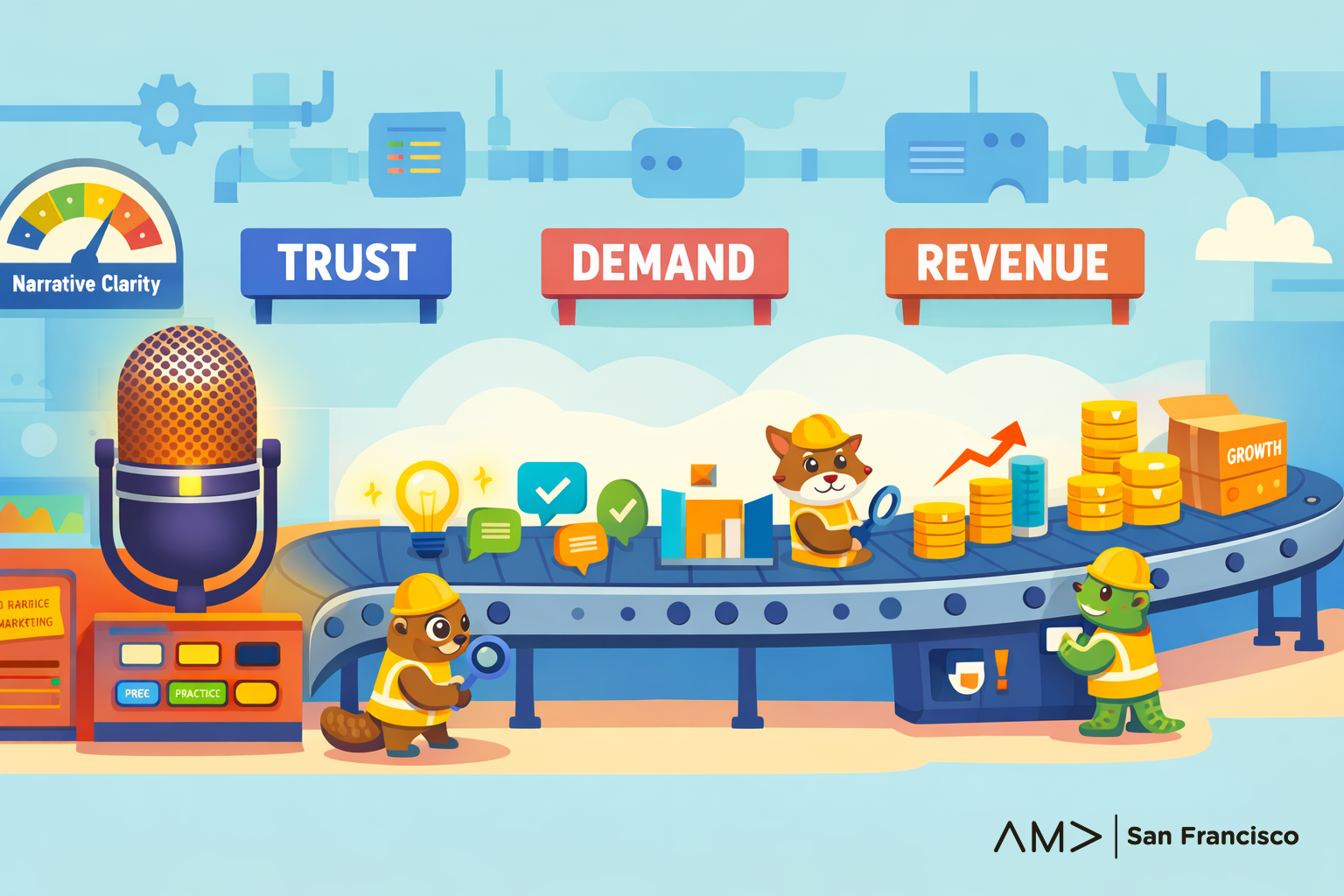
Our flagship podcast, Misadventures in Marketing, is back with Season 3! In the first episode, Stage Ready, Steve Haney and Peter Farago unpack a topic that many marketing teams still underestimate: public speaking.
Rather than treating speaking as a personal perk or a branding afterthought, Steve and Peter framed it as something much more consequential—a strategic growth channel that, when used deliberately, can align brand credibility, demand generation, and executive leadership. What followed was a grounded, experience-driven discussion about how modern B2B marketing leaders should think about speaking, conferences, and thought leadership in practice.
Speaking as a Program
One of the core points Steve and Peter emphasized is that speaking only creates value when it’s approached as a program, not a collection of one-off appearances. They cautioned against the common pattern many teams fall into: saying yes to random panels, paying for sponsored speaking slots, or rushing together decks simply to “show up.” In their view, that kind of activity creates noise, not momentum.
Instead, they argued that speaking should be treated like any other serious marketing channel, with clear answers to fundamental questions:
- Who should be on stage, and why
- Which events matter to buyers
- What narratives the company wants to reinforce over time
- How speaking supports pipeline, credibility, and category position
Steve and Peter noted that the strongest teams anchor their marketing calendars around a small number of tentpole events—conferences or forums that shape the year. Content, launches, sales activity, and even product timing then ladder into those moments, rather than competing with them.
Why Earned Speaking Matters More Than Sponsored Slots
Another clear distinction they drew was between being present at an event and being trusted by an audience. Pay-to-play speaking opportunities may increase visibility, but Steve and Peter stressed that they rarely build belief. Earned speaking roles—main stage talks, curated panels, or invited keynotes—signal credibility in a way sponsorships often can’t.
That credibility, they noted, only comes when the talk itself is useful. A speaking slot that functions as a thinly disguised product demo undermines trust rather than building it. The strongest talks, in their view, sit between a TED-style narrative and a boardroom briefing. They frame real shifts happening in the market, surface tensions leaders are actively navigating, and offer perspectives that help audiences make better decisions once they’re back at work.
The Leader’s Role Isn’t Visibility—It’s Orchestration
Steve and Peter also spent time on a less comfortable truth: most audiences don’t inherently want to hear from marketing or sales leaders. They want operators. Founders. Product leaders with firsthand experience and credibility.
That doesn’t mean marketing steps aside. Instead, they argued, marketing leadership steps up in a different way—by orchestrating the speaker bench. This includes coaching executives on narrative, helping product leaders tell a broader story, and ensuring speakers are prepared enough to earn the audience’s trust. From their perspective, effective CMOs don’t optimize for personal visibility. They optimize for impact, knowing when to take the stage themselves and when their real contribution is making someone else successful.
Preparation Signals Respect for the Audience
On the topic of personal preparation, both hosts were direct: great speakers aren’t natural—they’re prepared. They described the difference between talks that land and those that drift as almost always coming down to structure and rehearsal, not memorization.
Steve and Peter also discussed how modern tools, including AI, can support preparation by helping speakers organize raw ideas into a clear story spine, test opening hooks, and anticipate skeptical questions. The point, they emphasized, isn’t polish for its own sake. It’s clarity. If an audience can’t follow the story, trust erodes quickly.
Why Panels Require a Different Mindset
Panels, they noted, are where good intentions often break down. Too many panelists, vague points of view, and an absence of direction can leave audiences frustrated rather than informed. Whether moderating or participating, Steve and Peter stressed that the responsibility is the same: protect the audience’s experience.
Strong panels, in their view, share a few characteristics:
- Real tension in the topic
- Distinct, defensible perspectives
- Discussion that helps the audience decide what to do, not just what to think
They also challenged the idea that agreement equals success. Healthy disagreement, when grounded in credibility, signals that the conversation actually matters.
How Speaking Connects to Revenue
The conversation also addressed a common question: does speaking actually drive growth?
Steve and Peter were clear that it does—but not in a neat, last-click attribution model. In B2B buying journeys, decision-makers consume ideas long before formal evaluations begin. Thought leadership shapes how problems are framed, which vendors feel credible, and who even makes the shortlist. They also pointed to in-person events as one of the most effective environments for advancing real deals—not because of logos or swag, but because trust compounds faster when buyers hear how a company’s leaders think. From their perspective, speaking doesn’t replace demand generation. It sharpens it.
The Bigger Shift They’re Calling For
If there was one overarching theme in the discussion, it was this: marketing leaders need to stop treating speaking as theater and start treating it as infrastructure. When teams invest in ideas, preparation, and the right voices, speaking becomes a force multiplier across brand, demand, and leadership credibility. When they don’t, the gap is noticeable. As Steve and Peter framed it, that difference ultimately determines whether a company is merely seen—or genuinely remembered.
🎧 Tune in now to Season 3, Episode 1: Stage Ready.
👉 Listen to the podcast on Spotify and Apple Podcasts.
📚 Check out summaries from other episodes:
- When Nobody Cares: The New Rules of PR and Attention
- The New Reality: Content Has Never Been Easier—Or Harder
- Board Tales: How CMOs Win the Room When Every Second Counts
Misadventures in Marketing is a weekly podcast by the AMA San Francisco chapter. Veteran Silicon Valley marketing execs Peter Farago and Steve Haney explore the messy, rewarding, and occasionally absurd world of high-tech marketing — especially in early-stage startups. Each episode covers real-world challenges, trends, and lessons from the front lines.


Comments are closed.