
AMASF AMASF
  • About Us
    • 2025 - 2026 Board of Directors
    • Media Kit
    • Diversity, Equity and Inclusion Pledge
  • Events
    • AMA SF Events
    • AMA National Events
    • Marketing Hackathon
    • Playmakers
    • Past Events
  • Get Involved
    • Become a Member
      • Professional Marketers
      • Corporate
      • Collegiate
    • Become a Sponsor
      • Sponsorship
      • Current Sponsors
      • 2026-2027 Sponsorship Opportunities
    • About Volunteering
    • Open Positions
    • Externship Academy Openings
  • Career Center
  • Marketing Awards
    • 2026 Winners
    • 2026 Judges
    • 2026 Sponsors
    • Award Categories
    • Eligibility & Deadlines
    • 2025 Winners
  • Mentorship Program
  • Blog
  • Podcast
    • Season 3
    • Season 2
    • Season 1
AMASF AMASF
  • About Us
    • 2025 - 2026 Board of Directors
    • Media Kit
    • Diversity, Equity and Inclusion Pledge
  • Events
    • AMA SF Events
    • AMA National Events
    • Marketing Hackathon
    • Playmakers
    • Past Events
  • Get Involved
    • Become a Member
      • Professional Marketers
      • Corporate
      • Collegiate
    • Become a Sponsor
      • Sponsorship
      • Current Sponsors
      • 2026-2027 Sponsorship Opportunities
    • About Volunteering
    • Open Positions
    • Externship Academy Openings
  • Career Center
  • Marketing Awards
    • 2026 Winners
    • 2026 Judges
    • 2026 Sponsors
    • Award Categories
    • Eligibility & Deadlines
    • 2025 Winners
  • Mentorship Program
  • Blog
  • Podcast
    • Season 3
    • Season 2
    • Season 1

Rough Edges and Building Trust: B2B Marketing in the Age of AI Slop

  • Rinita Datta
  • October 5, 2026
  • B2B, Branding

One of the clearest shifts in B2B brand trust this year is also the least flattering. Scroll any Bay Area B2B marketing team’s LinkedIn feed this month and the sameness jumps out. You see the three-line hook, the bolded takeaway, and the tidy list nobody asked for. The data now backs up what the feed suggests, and LinkedIn has started treating it as a product problem.

What AI saturation looks like on LinkedIn right now

Pangram Labs ran just over one million posts through its AI-detection model in a study published in July 2026. The sample covered LinkedIn, X, Reddit, Substack, and Medium. LinkedIn supplied a third of the posts but 62% of all flagged AI content. More than 40% of its long-form posts, those over 250 words, came back fully AI-generated. Pangram’s data comes from users of its detection browser extension who opted in to share. That means the figure describes that audience, not every LinkedIn user. Even so, a B2B marketer on LinkedIn this week likely reads machine-written text in two of every five long posts.

LinkedIn has stopped pretending this is fine. At the end of July, the platform added a “Seems like AI slop” option to the post menu. Chief product officer Hari Srinivasan called AI slop “a top priority for all of us.” Within a few weeks, members had used the button more than one million times. Srinivasan said content LinkedIn classifies as low-quality AI now draws 40% fewer views. The feed itself now pushes this content down.

That shift lines up with a broader one. In August 2026, Optimizely published a survey of 1,000 UK consumers and 100 UK marketers. Three in four consumers said the marketing they receive is irrelevant. Sixty-nine percent called it generic, and 61% said the sheer volume overwhelms them. Tara Corey, Optimizely’s SVP of marketing, was blunt about the cause. “AI was supposed to help fix this, but so far, it’s mostly just helped marketers make more of the same.”

B2B brand trust: why buyers are pulling back from polish

The production side of B2B marketing moved fast. Content Marketing Institute’s B2B research for 2026 surveyed 1,015 B2B marketers. It found that 95% of organizations use AI-powered applications, and 89% use AI to create content. Only 58% said AI improved the quality of that content.

Buyers have clearly noticed the gap between output and quality. TrustRadius surveyed 1,862 B2B buyers for its 2026 B2B Buying Disconnect Report. Forty-seven percent said they trust online resources less than a year earlier. Ninety-four percent fact-check the information that AI tools give them. Vendor marketing collateral ranked dead last among the resources buyers consult. Customer reviews and peer conversations filled the space vendor content left behind.

MarketingProfs frames the risk from the automation side. In a 2026 piece on AI and B2B trust, Tiffany Nwahiri names it the AI marketing paradox. Her definition is sharp: “the same technology designed to drive efficiency can quietly erode credibility if it replaces human judgment.” Edelman’s June 2026 brand trust report adds a consumer-side data point from 17,688 respondents in 15 countries. Among skeptical, insular consumers, unpaid voices proved five times more powerful than paid brand voices at building trust. These sources measure different things, but they point the same way. Buyers can tell when a person made a call, and they can tell when nobody did.

Where rough edges stop earning trust

There is a catch in all of this. “Leave the rough edges in” can easily become cover for a lazy draft. Buyers punish sloppiness just as quickly as they punish polish. Rough edges earn trust when they carry information. They cost trust when they only signal that nobody put in the effort. A tradeoff the team argued about, a number that complicates the pitch, a limit the product actually has: those are rough edges worth keeping. Typos, vague claims, and unchecked sentences are just a sloppy draft wearing an authenticity costume. The test is whether the roughness tells readers something a polished version would hide.

What leaving the rough edges in means in practice

The practical version of this is narrower than “sound more human.” Before an AI-assisted draft goes out, add one thing the model can’t invent. That could be a specific number, a named tradeoff, or a point where the writer disagrees with the tidy version. Ninety-four percent of B2B buyers already check what AI tells them. Assume they will check your claims too, and source every single one. AMA SF’s own reporting shows how founders who stay visibly attached to their own brand build trust faster than ad spend. This isn’t the same problem as AI search citation mechanics, which is about being extractable to an algorithm. The real challenge is being worth extracting in the first place.

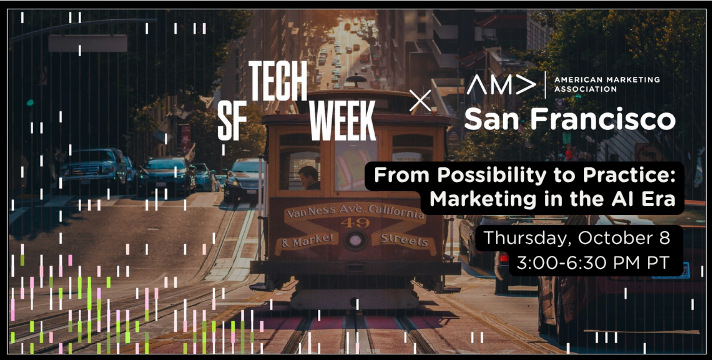
Bay Area marketing teams working through this tension can learn from leaders facing it this week. On Thursday, October 8, AMA SF and Quantcast host Marketing in the AI Era: From Possibility to Practice at Quantcast HQ. It’s part of #SFTechWeek, a week of events across San Francisco. The first panel, The Shift, looks at which AI changes matter most for marketing now. A second panel, The Practice, covers how leaders put AI to work and what results they see. Check-in opens at 3:00 p.m., and rooftop networking runs until 6:30 p.m. The numbers on this page define the shift, but Thursday is about the practice. We hope to see you on the rooftop!
About The Author

Rinita Datta is a Senior Director of Product Marketing at Splunk (a Cisco company), where she heads up product and technical marketing for the core Splunk Platform and AI. She also leads product-led growth, developer marketing and community engagement for the Splunk portfolio. With a background spanning financial services and technology industries, she has led product strategy, engineered full-stack solutions, built teams, and launched novel programs that enhance customer experiences. She holds an MBA from the University of Texas at Austin and a Bachelor’s in Electronics Engineering from VNIT, India. Outside work, she’s a rescue dog mom to an adorable Jindo named Chilli, loves mentoring budding marketers and is a huge Marvel nerd.

Subscribe to AMA SF email list

Comments are closed.

Upcoming events

6 events found.

Events

Today

List of events in Photo View

    AMA at Content Marketing World (CMW) and The Market Research Event (TMRE) (2026)
    object(Tribe\Utils\Date_I18n_Immutable)#21395 (3) {
      ["date"]=>
      string(26) "2026-10-05 00:00:00.000000"
      ["timezone_type"]=>
      int(3)
      ["timezone"]=>
      string(19) "America/Los_Angeles"
    }
    
    object(Tribe\Utils\Date_I18n_Immutable)#21386 (3) { ["date"]=> string(26) "2026-10-05 00:00:00.000000" ["timezone_type"]=> int(3) ["timezone"]=> string(19) "America/Los_Angeles" }
    Oct 5
    October 5 - October 7

    AMA at Content Marketing World (CMW) and The Market Research Event (TMRE) (2026)

    AMA x Advertising Week New York (2026)
    object(Tribe\Utils\Date_I18n_Immutable)#21378 (3) {
      ["date"]=>
      string(26) "2026-10-05 00:00:00.000000"
      ["timezone_type"]=>
      int(3)
      ["timezone"]=>
      string(19) "America/Los_Angeles"
    }
    
    object(Tribe\Utils\Date_I18n_Immutable)#21370 (3) { ["date"]=> string(26) "2026-10-05 00:00:00.000000" ["timezone_type"]=> int(3) ["timezone"]=> string(19) "America/Los_Angeles" }
    Oct 5
    October 5 - October 8

    AMA x Advertising Week New York (2026)

    Build a Brand Voice That Scales
    object(Tribe\Utils\Date_I18n_Immutable)#21347 (3) {
      ["date"]=>
      string(26) "2026-10-06 10:00:00.000000"
      ["timezone_type"]=>
      int(3)
      ["timezone"]=>
      string(15) "America/Chicago"
    }
    
    object(Tribe\Utils\Date_I18n_Immutable)#21377 (3) { ["date"]=> string(26) "2026-10-06 08:00:00.000000" ["timezone_type"]=> int(3) ["timezone"]=> string(19) "America/Los_Angeles" }
    Oct 6
    10:00 am - 12:00 pm CDT

    Build a Brand Voice That Scales

    Industry Trends Marketing Professors Should Know
    object(Tribe\Utils\Date_I18n_Immutable)#21361 (3) {
      ["date"]=>
      string(26) "2026-10-06 12:00:00.000000"
      ["timezone_type"]=>
      int(3)
      ["timezone"]=>
      string(15) "America/Chicago"
    }
    
    object(Tribe\Utils\Date_I18n_Immutable)#21311 (3) { ["date"]=> string(26) "2026-10-06 10:00:00.000000" ["timezone_type"]=> int(3) ["timezone"]=> string(19) "America/Los_Angeles" }
    Oct 6
    12:00 pm - 1:00 pm CDT

    Industry Trends Marketing Professors Should Know

    Smarter Social Listening: Customer Insights that Drive Business Decisions
    object(Tribe\Utils\Date_I18n_Immutable)#21459 (3) {
      ["date"]=>
      string(26) "2026-10-08 10:00:00.000000"
      ["timezone_type"]=>
      int(3)
      ["timezone"]=>
      string(15) "America/Chicago"
    }
    
    object(Tribe\Utils\Date_I18n_Immutable)#21330 (3) { ["date"]=> string(26) "2026-10-08 08:00:00.000000" ["timezone_type"]=> int(3) ["timezone"]=> string(19) "America/Los_Angeles" }
    Oct 8
    10:00 am - 12:00 pm CDT

    Smarter Social Listening: Customer Insights that Drive Business Decisions

    From Possibility to Practice: Marketing in the AI Era – #SFTechWeek
    object(Tribe\Utils\Date_I18n_Immutable)#21490 (3) {
      ["date"]=>
      string(26) "2026-10-08 15:00:00.000000"
      ["timezone_type"]=>
      int(3)
      ["timezone"]=>
      string(19) "America/Los_Angeles"
    }
    
    object(Tribe\Utils\Date_I18n_Immutable)#21497 (3) { ["date"]=> string(26) "2026-10-08 15:00:00.000000" ["timezone_type"]=> int(3) ["timezone"]=> string(19) "America/Los_Angeles" }
    Oct 8
    3:00 pm - 6:30 pm PDT

    From Possibility to Practice: Marketing in the AI Era – #SFTechWeek

  • Previous Events
  • Today
  • Upcoming events
  • Google Calendar
  • iCalendar
  • Outlook 365
  • Outlook Live
  • Export .ics file
  • Export Outlook .ics file

Our Annual Partners

© 2026 American Marketing Association San Francisco