


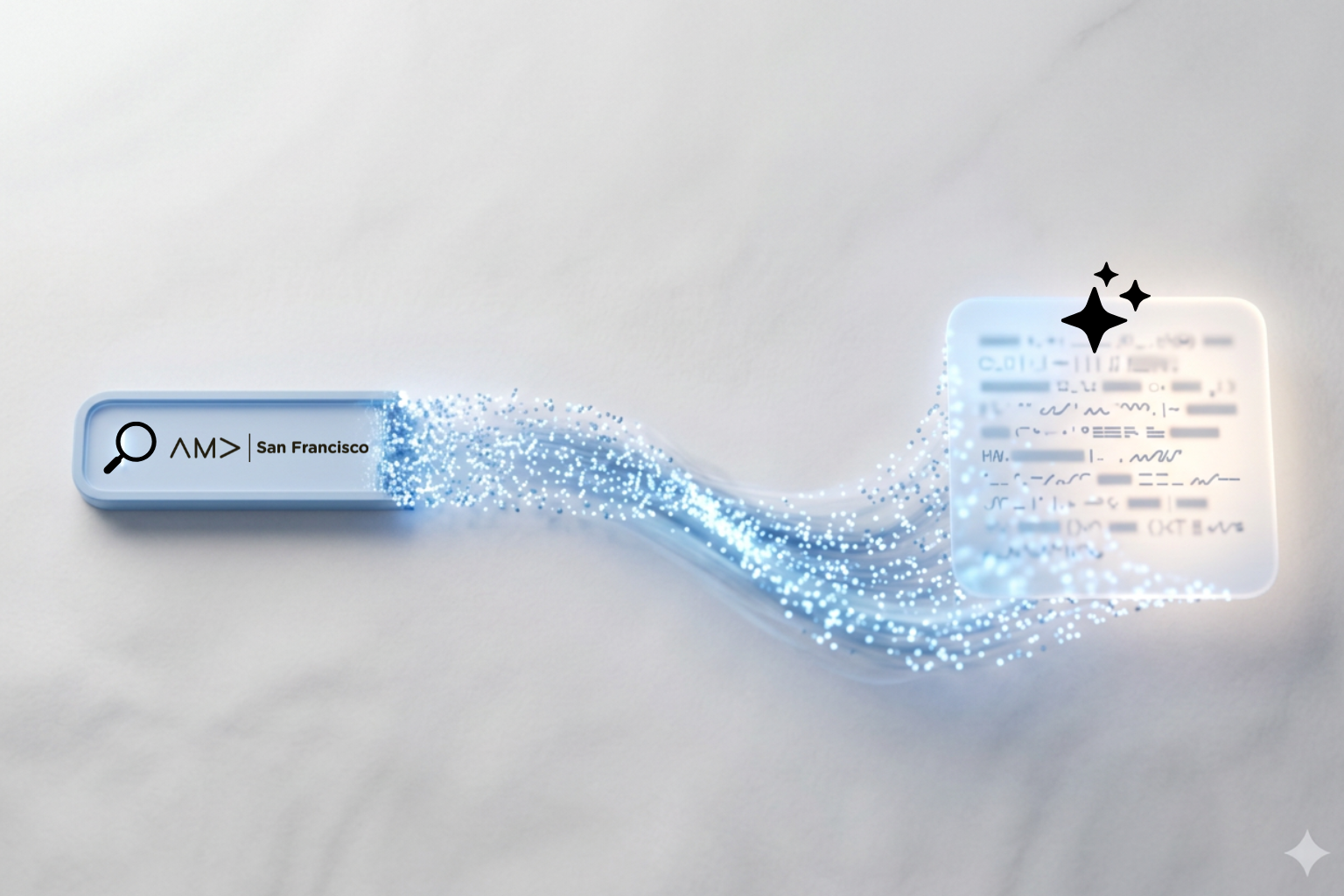
In May 2026, Ahrefs analyzed 137,000 domains and found something brutal. 97% of llms.txt files got zero requests from AI retrieval bots. The bots that did show up were mostly SEO audit tools and generic crawlers. Not PerplexityBot, OAI-SearchBot or Claude-SearchBot. Those three combined accounted for 1.1% of requests. Vendor decks call llms.txt the foundation of a generative engine optimization strategy. That 97% is a hard number to argue with.
It also points at something larger. Most of generative engine optimization is not new. Call it 70% the SEO work marketers have done for a decade, reframed for engines that synthesize instead of rank. The other 30% is a handful of genuinely new moves. The teams getting cited in AI answers didn’t discover a separate channel. They got the fundamentals right, and they did it early. Vendor guides skip that part, because fundamentals don’t sell a tool.
What GEO and AEO actually are (and how they differ from SEO)
The three acronyms describe a single continuum, not three competing frameworks.
Traditional SEO optimizes pages to rank on a results page. The asset is the ranked URL. Success means a click-through. AEO, answer engine optimization, goes one step further. It optimizes content to be extracted verbatim as a direct answer, targeting featured snippets, voice queries, and FAQ responses. That pushes structure toward short, pull-ready sentences. GEO, generative engine optimization, is the third evolution. It optimizes for engines that synthesize across many sources and decide whose framing to adopt. The metric is not position, or even extraction. It is citation rate inside an AI-generated answer. AEO makes content easy to extract. GEO makes the engine choose it.
The relationship among the three is where most guides go wrong. GEO and AEO do not replace SEO. They extend it. The AI citation surface still leans on traditional organic ranking. Perplexity shows 43.5% URL overlap with Google’s top-10 organic results, the highest Google alignment of any major engine. Win the citation surface without first winning search? The data doesn’t support it. Any guide that promises otherwise is selling a shortcut.
This is also why the llms.txt finding matters past the headline. Google’s John Mueller compared the file to the keywords meta tag: self-reported information search systems have ignored for years. The reason is simple. The parties with the most to gain are the ones supplying it. Google has confirmed it won’t support llms.txt. The file takes thirty minutes to implement. It is not a strategy.
Which AI engine to prioritize first and why the order matters for B2B
For Bay Area B2B tech companies, the buying committee complicates engine prioritization. Buyers aged 25 to 34 use AI tools for supplier research at 85%. Buyers aged 55 to 64 use them at 23%. A multi-person SaaS purchase spans that whole range. That’s what makes the list below a sequence, not a single pick.
Google AI Overviews come first, because there is no opting out. They appear on 48% of monitored search queries as of March 2026, per BrightEdge. Buyers land in this surface whether or not your content is optimized for it. The only way in is to rank in traditional search. Get cited inside an AI Overview and you’re associated with 35% more organic clicks. Miss it, and position-one CTR drops 58% when an AI Overview appears. The citation is the difference between a managed decline and a steep one.
Perplexity comes second, on citation density and Google alignment. It averages 21.9 citations per response against ChatGPT’s 10.4. Its 43.5% overlap with Google’s top 10 means content that already ranks tends to surface here too. Perplexity users send longer, more specific queries and arrive in research mode. That fits B2B. For content already ranking in Google, it’s the highest-return secondary surface, earned the same way Google is: visible sourcing, dating, and specificity.
ChatGPT Search sits third by volume, even as its share erodes fast. It held 89% of measurable B2B AI referrals in August 2025. By spring 2026 that figure was 62.6%, a 26.5-point drop in eight months. The source is a Goodie B2B panel covering 41 brands and 2.8 million AI referral sessions. The platform is still enormous. ChatGPT crossed 1 billion monthly active users in May 2026. But at 10.4 citations per response, a citation is harder to win here than on Perplexity. Audience size is what keeps it on the list.
Claude ranks fourth today, on a curve climbing fast. In the same panel, Claude generated 18.5% of AI referrals from only 1.29% of AI platform visits. That’s a high referral rate for a product that isn’t primarily search. Broader trackers put Claude nearer 1.6% across all sectors. And Claude-SearchBot is now among the most active AI retrieval crawlers on the web, per Cloudflare Radar in May 2026. A move from 1.4% to 18.5% of B2B referrals in eight months outpaces every other engine here. That’s why it registers now, not at the next planning cycle.
What actually moves citation rate (it’s mostly content fundamentals)
The teams that win a new surface almost always invested in content quality before the surface existed. Not the ones who showed up afterward with a checklist. Every channel shift has run this way. Generative engine optimization follows the same arc, and the moves that earn citations are familiar ones sharpened for extraction. Pages that get cited lead each section with a direct answer, inside the first 40 to 60 words. AI engines lift verbatim openers when they match the query. Human readers prefer the format too. The point belongs at the top, not buried in the third paragraph.
Fact density beats volume. One attributable statistic every 150 to 200 words is the working benchmark. Vague claims don’t get cited. Specific ones do. “73% of B2B buyers use AI tools in their purchase research, per a 2026 multi-source analysis” is citable in a way “many buyers now use AI” never will be. Structured pages are 2.8x more likely to be cited in AI responses. FAQ schema can lift citation rates by 30 to 40%.
The technical layer that actually changes categorization is entity clarity. That means one canonical entity per page. A definitional opening sentence an engine can extract. JSON-LD structured data tying that entity to the knowledge graph. This is the part llms.txt was supposed to handle and doesn’t. It describes preferences that go unread. Schema describes relationships the engines actually consume. FAQ schema returns faster than almost any other move. Measurable GEO results typically appear within 4 to 8 weeks. Full citation authority takes three to six months, per Directive Consulting, 2025. Teams that file it under minor tactics leave that early return on the table.
If your team already builds on traditional SEO fundamentals, most of this work is underway. The GEO addition is incremental: FAQ schema, tighter opening paragraphs, a year and a source on every claim. The broader story of how AI in marketing reshaped B2B buyer research explains why those small changes compound. And the SEO ranking tactics that earned organic traffic in the first place stay the foundation GEO sits on. Not a thing it replaces.
The measurement problem vendors don’t talk about
AI citation rate is a real metric. It is also not the metric most CMOs are actually asking about. That gap is where the current wave of AI-visibility tooling gets oversold. The pattern is everywhere right now. Organizations buy the dashboards before establishing what AI-driven brand awareness does to pipeline.
A high AI mention rate does not convert cleanly into brand recall. The share of buyers who remember the brand they saw lags the citation rate by a lot. The distance between a source being cited and a buyer remembering it is the accountability question no vendor dashboard has closed. Synthesis is the whole point of a generative engine. The sources are the footnotes most people never read.
What the data does support is narrower and more reliable. Citation inside an AI Overview is associated with 35% more organic clicks. AI-referred traffic grew 527% across 400+ sites in the five months from January to May 2025. AI-referred sessions average 58.5 seconds of engagement against 44.2 seconds for Google organic, about 30% longer. Those signals are real and worth tracking. But they sit upstream of revenue. The citation-to-pipeline chain isn’t yet measurable at the precision most CMOs expect.
The practical response is to build the plumbing before volume makes attribution noisy. Set up a separate GA4 source bucket for AI referrals. Track citations with the tools available. Hold back on attribution claims until the methodology settles. A dashboard showing AI share of voice measures something genuine, just not the pipeline figure leadership has in mind when they ask whether it’s working.
The underlying erosion is what makes the question legitimate. 68% of Google searches in Q1 2026 ended without a click, up from 60% two years earlier. The CMOs asking about generative engine optimization are right to ask. The honest answer is just more grounded than the vendor pitch. Content earns citations by being genuinely useful and specifically sourced. The AI surfaces follow from that, not from a checklist bolted on afterward.
For marketers weighing where to start, two moves return inside 4 to 8 weeks: answer-first structure and FAQ schema. The surfaces are moving faster than most annual planning cycles can absorb. ChatGPT shed 26.5 points of B2B referral share in eight months. That alone makes this a live, recurring conversation, not a one-time project. In the Bay Area, a lot of that conversation happens out loud. At AMA SF events, and on the Misadventures in Marketing podcast, where the subject is what’s actually moving in pipelines rather than what’s in a vendor deck.

Comments are closed.