


Sports marketing has always moved quickly, but the pace of change has accelerated. New media platforms and digital distribution are reshaping how fans discover and follow sports. Athletes are increasingly operating as independent brands. Teams now compete not only on the field but also in culture, content, and community relevance.
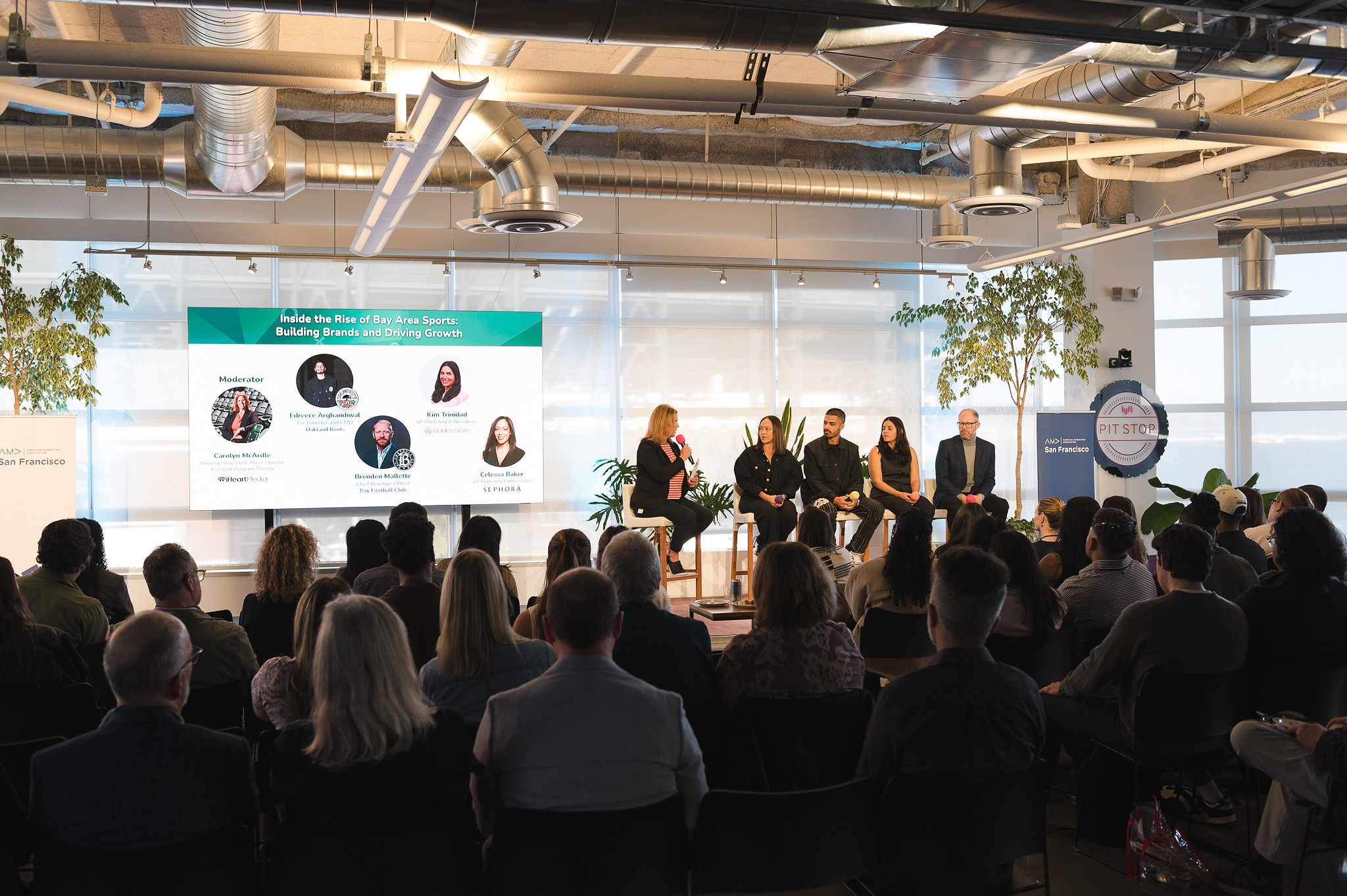
At Playmakers, AMA San Francisco’s sports marketing summit held at Lyft HQ in March 2026, leaders from the Golden State Warriors, Oakland Roots, Bay FC, Sephora, NBC Sports, Digitas, The Athletic and more gathered to talk openly about what’s actually working and what isn’t. The conversation explored how the industry continues to evolve and was full of Bay Area pride.
This three-part event recap series explores the most important insights from discussions we facilitated at the Playmakers event:
- Part 1: Why community identity drives the success of Bay Area sports brands
- Part 2: How partnerships move beyond sponsorship logos toward storytelling
- Part 3: Why digital platforms are transforming sports storytelling and fan engagement
Together, these lessons form a new playbook for marketers navigating culture, community, and contemporary media.
Building Communities As a Strategic Lever
Rather than treating sports franchises as isolated entertainment products, speakers described them as community institutions embedded in local culture. That distinction matters for marketers. Traditional marketing models often treat audiences as customers moving through funnels whereas sports teams approach fans as members of a collective identity. This approach changes everything from brand voice to partnership strategy. Successful sports brands choose to focus on building belonging rather than simply selling products.
Many organizations treat community programs as peripheral initiatives designed to improve brand reputation. For many sports organizations, community engagement now operates as a core strategic capability. Youth initiatives, local partnerships, and supporter culture create a continuous feedback loop between teams and fans. These programs generate more than goodwill, they build trust, expand reach, and deepen emotional loyalty. Community engagement also influences product design and fan experience. Teams design stadium events, digital content, and merchandise around the rituals that supporters value most.
Katie Hegarty, Sales Lead at Lyft Ads emphasized how teams hear from their audiences directly: “The fans will tell you if it’s working” to which Alexandria Leavenworth, VP, Creative and Strategic Marketing at NBC Sports Bay Area & California and NBC Bay Area replied, “Oh, and they will tell you if it’s not working, too.” Brands in every industry must learn how to cultivate communities rather than simply targeting audiences. Community participation transforms customers into stakeholders who shape the brand narrative alongside the organization.
Culture and Regional Identity Power Bay Area Sports Brands
Few places in the United States demonstrate regional sports identity as strongly as the Bay Area. Fans from cities separated by bridges, counties, and economic divides often unite under the shared label of “the Bay.” That collective identity creates emotional cohesion across teams and leagues. The panels noted that fans often see sports teams as cultural ambassadors representing the region’s creativity, diversity, and entrepreneurial spirit.
As Alexandria Leavenworth said, “I think it’s the power of local… there really is a power to local broadcasting, local storytelling, and giving the locals what they want.” Because of that dynamic, sports marketing leaders invest heavily in understanding the local stories that shape fandom.
Teams such as Oakland Roots demonstrate how a community-first model can work in practice. The club has built a brand around civic pride, cultural symbolism, and social values rather than purely athletic success. Supporters respond because the brand reflects their own identity. The results are tangible. Two years ago, Oakland Roots launched a community investment round that broke an American sports record, raising $3.6 million from more than 6,000 individual investors, with a minimum buy-in of $100. The growth is visible in the venues too. Oakland Roots went from playing in front of 2,500 people at Laney College to drawing 26,000 for a home opener at the Oakland Coliseum. “The building of that was done organically,” said Edreece Arghandiwal, Co-Founder and Chief Marketing Officer, at Oakland Roots, “And it was done by common people.”
Community-driven storytelling also amplifies organic growth. When fans believe a team represents their city and their culture, they become advocates who spread the message naturally. Traditional advertising rarely matches the same level of emotional investment.
Fans no longer experience sports solely through games. They engage through social media, live events, watch parties, community gatherings, and cultural collaborations. For teams that embrace these dynamics, sports brands begin to function more like cultural platforms than traditional athletic organizations.
Authenticity Matters More Than Reach
Large markets typically encourage aggressive scale strategies. Bay Area sports leaders often take the opposite approach. Kim Trinidad, VP Marketing & Operations at Golden State Warriors described how the Valkyries brand was built through genuine community listening rather than internal assumptions. The team declined safer naming options, chose a color, violet, that had never been used in the WNBA, and made those decisions because fans told them to. “We were informed by the audiences, by our communities that this was the right decision,” Trinidad said. “It really did feel like we were not only taking that disruptive risk, but also making sure that it felt right for this community because they were speaking it with us.”
Celessa Baker, VP of Marketing Partnerships at SEPHORA, offered an outside-in perspective. When Sephora first approached sports partnerships, their leadership was curious about the sports opportunity: Can Sephora show up for fans meaningfully? Do women bring their friends? What followed was a front-row seat to something Sephora hadn’t fully anticipated, the intensity of Bay Area fan pride. “The pride that the Bay Area community invests into their sports franchises is matched by no other city in the country.”
This approach sometimes requires difficult decisions. Some organizations intentionally decline sponsorship deals that do not match their values or community priorities. Short-term revenue may suffer when teams reject certain partnerships. Long-term brand equity usually benefits from that discipline. Fans recognize authenticity quickly, and they react strongly when organizations compromise their stated principles. Maintaining trust therefore becomes a strategic imperative.
Marketers outside the sports world face a similar challenge. Growth pressure often encourages companies to pursue every opportunity available. Many strong brands resist that impulse and concentrate on partnerships that reinforce their identity. Authenticity requires patience, but it builds resilience.
The Business Model Is Changing
The economic structure of sports marketing continues to evolve rapidly. Ticket revenue and broadcast rights once dominated the industry’s financial model. Today’s teams must build diversified revenue streams anchored in brand strength.
Community membership programs, digital content ecosystems, and local collaborations now play increasingly important roles. As Alexandria Leavenworth explained: “A year ago, I couldn’t even tell you this, but today…NBC Sports Bay Area, you don’t have to have cable to watch us. We’re available as an add-on on Peacock. We just launched on Prime Video. We’re also available through MLBTV/Giants TV as well. So now we have direct to consumer products…As long as people are leaving one place and going to another where they’re still consuming our product, we’re good.”
Organizations such as Bay Football Club, which launched into the rapidly growing NWSL landscape, operate with a startup mentality just like Oakland Roots mentioned above. Leadership teams simultaneously build operations, marketing infrastructure, and fan communities. This process resembles technology startup growth more than traditional franchise expansion. Early brand decisions therefore carry enormous weight. Identity systems, storytelling frameworks, and community relationships must all develop in parallel with the competitive product.
The Future of Sports Marketing
The Bay Area has always been a place that moves first. What the Playmakers conversation made clear is that its sports organizations are doing the same, building brands around belonging, betting on authenticity, and proving that community isn’t a soft concept. It’s a competitive advantage. For the marketers in that room, and anyone following from outside it, that’s a playbook worth watching.
➡ Read Part 2: Beyond the Logo: The New Playbook for Sports Partnerships
In the next article, Playmakers speakers explain how sponsorships have evolved into story-driven collaborations that create value for teams, brands, and fans.
Playmakers Bay Area Sports Marketing Summit was held on March 11, 2026 at Lyft HQ with the following list of esteemed speakers:
Session 1: Building a Brand: Inside the Rise of Bay Area Teams
Moderator: Carolyn McArdle, PA Announcer for the San Francisco Giants and co-host of the Morning Breeze on 98.1 The Breeze
- Kim Trinidad, VP Marketing & Operations, Golden State Warriors
- Edreece Arghandiwal, Co-Founder and Chief Marketing Officer, Oakland Roots
- Brenden Mallette,Chief Revenue Officer,Bay Football Club
- Celessa Baker, VP of Marketing Partnerships, SEPHORA
Session 2: Beyond the Stadium: The New Sports Marketing Playbook
Moderator: Katie Hegarty, Sales Lead, Lyft Ads
- Alexandria Leavenworth, VP, Creative and Strategic Marketing, NBC Sports Bay Area & California and NBC Bay Area
- Shabnum Mehra Palomba, Executive VP, Digitas
- Bryan Srabian, VP of Brand Development and Digital Media, San Francisco Giants
- Jenna Winchell, Managing Director, Marketing, The Athletic
Huge thank you to our amazing sponsors Lyft Ads, iHeartMedia, StackAdapt, Life360 Ads, Causal, Justin Chu Photography, Peakbound Studio, and our annual sponsor, Workbox for helping bring this event to life.
Marketing is evolving fast—and none of us should have to figure it out alone. At the American Marketing Association, you’ll find marketers sharing real experiences, hard-earned lessons, and practical frameworks for navigating change with clarity and purpose. If that sounds like your kind of community, we’d love to have you! Become a member today.


Comments are closed.