


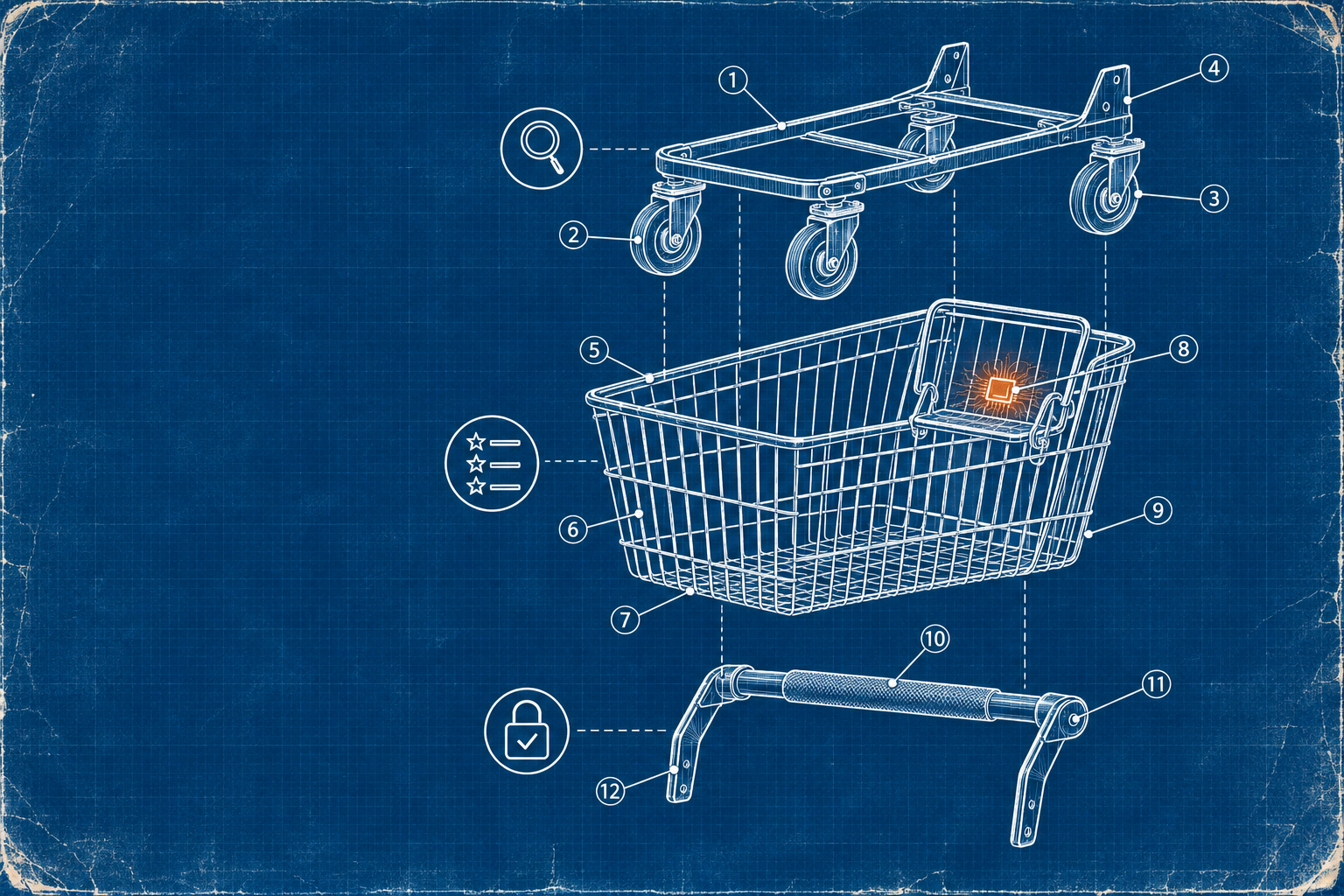
Black Friday got its name from people who hated it. Philadelphia police officers in the early 1960s used the phrase to describe the gridlock, packed sidewalks and long shifts that hit Center City every year after Thanksgiving. Sixty-five years later, the traffic retailers worry about most may not be human at all. This weekend, personal AI agents hit the Black Friday mainstream, finding deals, filling carts and paying on behalf of shoppers. Meanwhile, the biggest online store in America is still deciding whether to let it in.
Where did the term Black Friday actually come from?
Black Friday, as a shopping term, came from Philadelphia police officers, not accountants. Officers used it for the Friday after Thanksgiving, when suburban shoppers flooded downtown. Fans arriving for the Saturday Army-Navy football game made the crowds even worse. By 1961 the phrase had spread far enough that local merchants tried to rename the day “Big Friday.” That rebranding campaign went nowhere, and the police version stuck.
The cheerful explanation most people know came much later. Researchers trace the earliest known printed use of the “retailers go into the black” story to 1981. Retail historian Michael Lisicky credits Philadelphia merchant Peter Strawbridge with spinning the ledger-book version, because the original name scared shoppers away. The phrase stayed mostly regional until the late 1980s, when it finally went national.
For marketers, that origin story offers the first lesson. Black Friday ranks among the most successful rebrands in retail history, and it started as damage control.
How did Black Friday marketing trends evolve over a century?
Retailers spent a century building the day, one tactic at a time. Macy’s and other department stores used Thanksgiving parades in the 1920s to announce Santa’s arrival. That made the next day the unofficial start of holiday shopping. In 1939, merchants even persuaded President Franklin Roosevelt to move Thanksgiving a week earlier to stretch the season. Critics called it “Franksgiving,” and the extra week did little for sales.
The doorbuster era came next, and it got loud. Through the 1990s and 2000s, retailers ran scarcity marketing at full volume with newspaper circulars, predawn openings and limited-quantity TVs. The formula drew huge crowds until it turned deadly. In 2008, about 2,000 shoppers broke through the doors of a Long Island Walmart and trampled a new employee, Jdimytai Damour.
After that, the calendar started to stretch. Target, Kohl’s and others opened at midnight in 2011, while Walmart started its deals at 10 p.m. on Thanksgiving. A year later, Walmart pushed its start to 8 p.m. That creep gave brands room to counter-position. REI did it best in 2015, closing its stores on Black Friday under the #OptOutside banner.
What changed when Black Friday moved online?
Cyber Monday proved that the industry could manufacture a shopping holiday on purpose. Shop.org, part of the National Retail Federation, coined the name in a November 2005 press release. By Shop.org’s own count, the Monday after Thanksgiving ranked only twelfth among online shopping days at the time. Within about five years it had become the biggest one, a self-fulfilling prophecy that its own co-founder acknowledges.
Smartphones and the pandemic finished the job. Black Friday itself became an ecommerce event, with U.S. online sales hitting a record $11.8 billion in 2025, according to Adobe. Mobile devices accounted for 55.2% of that day’s sales. On Black Friday 2025, Adobe also counted an 805% jump in AI-driven traffic to U.S. retail sites, as shoppers asked chatbots to compare prices before they clicked.
The event also kept spreading across the calendar. Right now, the NRF expects 182.7 million people to shop over Thanksgiving weekend 2026, down 2% from its forecast last year. The NRF credits holiday shopping that keeps getting pulled forward. Back in September, Adobe predicted that October would bring “a Black Friday’s worth” of extra spending. Even so, Adobe forecasts Black Friday online sales of $12.9 billion this year, growing faster than Cyber Monday.
Why did Amazon block Meta’s Muse agent?
Meta launched Muse on September 8 as a personal agent that handles email, calendars, dining, payments and shopping. It quickly climbed to the top of Apple’s free App Store chart. Twelve days later, on September 20, Amazon blocked it from browsing and buying on Amazon.com. Shoppers who asked Muse to check out saw a pop-up saying an unauthorized AI agent violated Amazon’s Conditions of Use.
Amazon said Meta never told it that Muse would access the store, and it cited terms-of-service, privacy and security concerns. There is also a clear commercial incentive at play. Amazon’s ad business brings in roughly $68.6 billion a year, and outside agents can bypass the sponsored placements that drive it. CEO Andy Jassy told analysts in October that outside agents are “still not great, nor more convenient than coming to a retailer directly.” He also said outside agents were not the cause of a softer advertising quarter. His company would rather send shoppers to its own assistant, Alexa for Shopping.
Who is letting AI agents shop this Black Friday?
Several other platforms chose the opposite path. One day after the Amazon block, Shopify announced Muse checkout through Shop Pay for merchants who opt in. On November 24, Walmart opened its Black Friday deals to Muse through its new Agent Gateway. Shoppers set spending limits and approval thresholds, and Walmart lists agent orders separately in purchase history.
Amazon may now be reconsidering its approach. On November 25, Fortune reported that Amazon and Meta are negotiating to restore Muse’s access. Ad revenue and control of search results remain the sticking points, and neither company had announced a deal at the time of writing.
Who controls the shelf when an agent does the shopping?
The Walmart deal reveals what the fight is really about. When a shopper asks Muse for a TV under $500, Muse passes the request along to Walmart. Walmart’s own systems then choose which products come back. In other words, Walmart keeps the shelf even when the customer never visits its website. Whoever ranks the results influences which brands get seen, and that could reshape where retail media budgets go.
Being discoverable by an agent, being recommended by one and being purchasable through one are three different challenges. Modern marketing teams now need a plan for all three.
That shifts the work in a few concrete ways:
- Treat product data as your new creative. An agent reads price, specs, availability and return policy, not your hero banner. Clean, complete catalog data becomes the ad.
- Audit where agents can and cannot buy you. If your products sit mainly on a marketplace that blocks agents, you risk losing the ability to convert that demand.
- Rethink urgency tactics built for human shoppers. Countdown timers and limited-quantity doorbusters play on human anxiety. An agent weighs offers against a shopper’s budget and instructions, not against a ticking clock.
- Ask retail media partners the hard questions. Find out whether sponsored placements appear in agent results, and how partners measure that inventory.
Are shoppers actually letting AI agents buy for them?
Not yet, at least not at scale. A Salesforce survey across four countries found that 31% of shoppers have tried a personal AI agent. Only about 6% of everyone polled has used one to check out. Most people still treat AI as a research assistant, then finish the purchase on a retailer’s own site.
That gap tells the honest story for this weekend. Agentic commerce will not replace Black Friday in 2026. It will, however, shape which retailers show up when shoppers ask an assistant where the deals are. Adobe expects AI-referred traffic to retail sites to nearly double on Black Friday compared with last year.
Black Friday has always been about managing traffic. Philadelphia police fought crowds of cars, and retailers spent decades turning those crowds into a ritual. This year’s traffic includes software acting on a shopper’s instructions, with a budget and no patience for gimmicks. The next chapter of Black Friday marketing trends belongs to the brands those agents can read, trust and reach.

Comments are closed.