AMASF AMASF
  • About Us
    • 2025 - 2026 Board of Directors
    • Media Kit
    • Diversity, Equity and Inclusion Pledge
  • Events
    • AMA SF Events
    • AMA National Events
    • Marketing Hackathon
    • Past Events
  • Blog
  • Get Involved
    • Become a Member
      • Professional Marketers
      • Corporate
      • Collegiate
    • About Volunteering
    • Open Positions
    • Externship Academy Openings
  • Become a Sponsor
    • Sponsorship
    • Current Sponsors
    • 2024-2025 Sponsorship Opportunities
  • Career Center
  • Marketing Awards
    • Eligibility & Deadlines
    • Award Categories
    • Thanks to our Excellence in Marketing Awards Judges
    • Thank You to our Sponsors
  • Mentorship Program
AMASF AMASF
  • About Us
    • 2025 - 2026 Board of Directors
    • Media Kit
    • Diversity, Equity and Inclusion Pledge
  • Events
    • AMA SF Events
    • AMA National Events
    • Marketing Hackathon
    • Past Events
  • Blog
  • Get Involved
    • Become a Member
      • Professional Marketers
      • Corporate
      • Collegiate
    • About Volunteering
    • Open Positions
    • Externship Academy Openings
  • Become a Sponsor
    • Sponsorship
    • Current Sponsors
    • 2024-2025 Sponsorship Opportunities
  • Career Center
  • Marketing Awards
    • Eligibility & Deadlines
    • Award Categories
    • Thanks to our Excellence in Marketing Awards Judges
    • Thank You to our Sponsors
  • Mentorship Program

Content Marketing 101: The Role of Native Advertising

  • Eric Weidner
  • April 19, 2016
  • Content Marketing, Education, Professional Development, Uncategorized

Native Advertising 650

By: Amanda E. McCoy

According to Joe Pulizzi at the Content Marketing Institute, content marketing and native advertising have a tendency to be used interchangeably, but in doing so we are limiting ourselves, because native advertising is only one way to distribute content.

Advertising entails paying a third party for distribution. Many sites have advertising platforms which post banner ads and have pay per click links displayed in their margins. This can be an effective advertising tactic for some, but does not promote engagement with the user, and can be disruptive to the user experience.

Native advertising, on the other hand, “doesn’t disrupt the user experience and offers helpful information in a format similar to the other content on the site, so users engage with it more than they would with, say, a banner ad. (This is good for advertisers, and if the content is truly useful, good for consumers.) In very simple terms, native advertising is one way content marketers can distribute their content,” according to an article by Pulizzi on the differentiation of the two.

This combats the disruption by delivering your content in stream. This means the platform is being paid to embed content into the stream or format of the page which the user is already being exposed to, (usually by choice) which allows the content to be distributed in a more organic fashion. The user feels more inclined to interact and engage with the material because it is located in a place where the user is already interacting. This form of advertising can be extremely useful when a company distributing content doesn’t necessarily have a fully developed user base, or is looking to expand to a targeted demographic.

According to Chris Schreiber’s article about a mobile content experience study conducted by Sharethrough, if your target market is the Millennial, native advertising is really where it’s at. User experience is at the top of the list when it comes to the Millennial ad experience, and considering the majority of Millennials are basically drinking a daily social media feed smoothie, it makes sense. Considering the fact that the Millennial generation is highly adaptable (at least for now) and they make up roughly a quarter of our population, native advertising seems like a reasonable, if not necessary, investment.

Amanda E. McCoy holds a B.A. in Communication Studies from San Francisco State University and is a Content Writer for the San Francisco American Marketing Association.

About The Author

Eric Weidner has been a AMA SF member since 2010. His vision for a successful AMA SF is to bring together technology, knowledge and thought leadership to help others in the marketing community succeed. He wholeheartedly believes his fellow members and the AMA SF’s resources have helped him stay informed and connected to the overall practice of great marketing. As the owner of Workbox, Eric provides leadership to his clients by tapping into his extensive marketing and technology background to design and build websites and web apps, and run sophisticated online marketing campaigns.

Subscribe to AMA SF email list

Comments are closed.

Upcoming events

6 events found.
Today
Transform Your Marketing with AI: Hands-On Workshop Series
Dec 6
November 24 - December 15

Transform Your Marketing with AI: Hands-On Workshop Series

2025 AMA Health Care Executive Summit (Invitation Only)
Dec 8
December 8 - December 10

2025 AMA Health Care Executive Summit (Invitation Only)

Skills and Tools Marketers Need to Win in 2026
Dec 9
12:00 pm - 1:10 pm CST

Skills and Tools Marketers Need to Win in 2026

Using AI to Transform Your Marketing Automation
Dec 11
10:00 am - 12:00 pm CST

Using AI to Transform Your Marketing Automation

5 Ways that AI Transforms Webinars
Dec 11
1:00 pm - 2:00 pm CST

5 Ways that AI Transforms Webinars

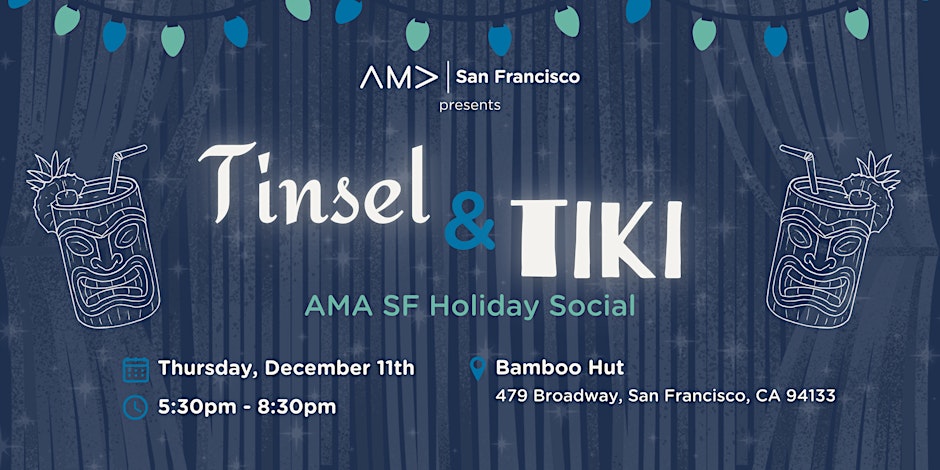
AMA SF Holiday Party (Tiki Style) – Tickets on sale soon
Dec 11
5:30 pm - 8:30 pm PST

AMA SF Holiday Party (Tiki Style) – Tickets on sale soon

  • Previous Events
  • Today
  • Upcoming events
  • Google Calendar
  • iCalendar
  • Outlook 365
  • Outlook Live
  • Export .ics file
  • Export Outlook .ics file

Our Annual Partners

© 2025 American Marketing Association San Francisco